Connected speakers are a serious alternative to traditional hi-fi systems. They offer a simpler and more intuitive solution by directly integrating the amplification and connectors, but also by providing access to streaming. These speakers are intended to be used at home and therefore do not include a battery like portable Bluetooth speakers for which we have already published a guide: A comparison of the best portable Bluetooth speakers. Several types of connected speakers currently exist: Bluetooth connected speakers, smart speakers, multi-room speakers and hi-fi wireless speakers (stereo). Understanding the differences between these speakers is the key to making the right choice. In this comparative guide about the best connected speakers, we will give you all the information you need to choose a speaker that suits your needs.

Bluetooth connected speakers
Bluetooth speakers are often the most basic, but not the least powerful. Their main advantage lies in their ease of use. In practice, all you have to do is pair the speaker to the source and play your music. Bluetooth technology makes it easy to play any audio stream, smartphone or tablet in hand. Some Bluetooth speakers, such as the Muse M-1350 BTC, are intended for home use, while the most compact models, such as the Bang & Olufsen Beosound Level, generally have a rechargeable battery for mobile use.
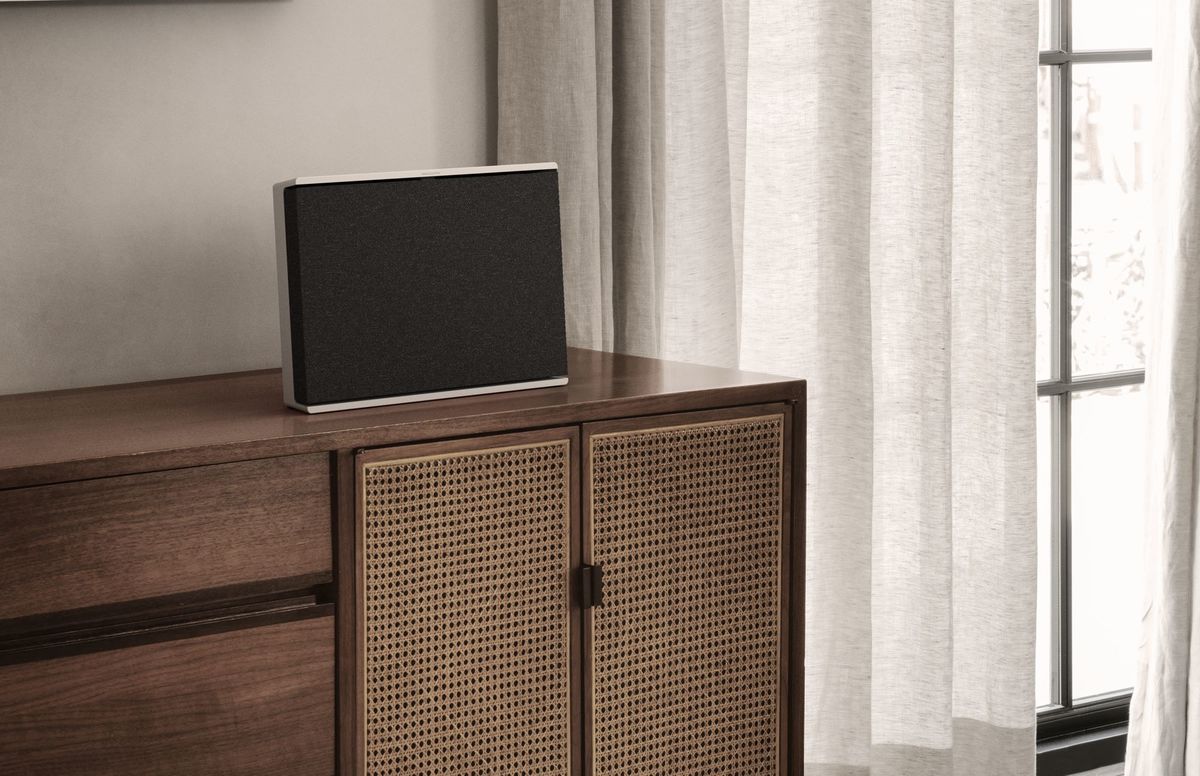
However, Bluetooth technology has a few drawbacks, starting with the transmission range which is often limited to 10 meters. This makes Bluetooth speakers less than ideal if you want to stream music from one room to another in your home. The data rate of the audio stream offered by this type of connection also varies according to the Bluetooth protocol used by the speaker and the associated source. For example, the most standard Bluetooth codec is limited to 350 kbits/s, compared to near CD quality for the aptX and aptX HD codecs. Therefore, it is best to choose an aptX and/or aptX HD compatible speaker like the B&W Formation Flex to guarantee a high-quality transmission.

WiFi and Ethernet connected speakers
WiFi connected speakers feature a WiFi and/or Ethernet network controller. These models are the most powerful and comprehensive, integrating countless streaming protocols. You’ll be able to access various online music services such as Spotify, Deezer and Apple Music with speakers like the Sonos Era 100, but also Qobuz or Tidal with models like the Elipson W35 Xi. To make your choice easier, you can use the connected speaker filters to display only models that are compatible with your favorite music service.
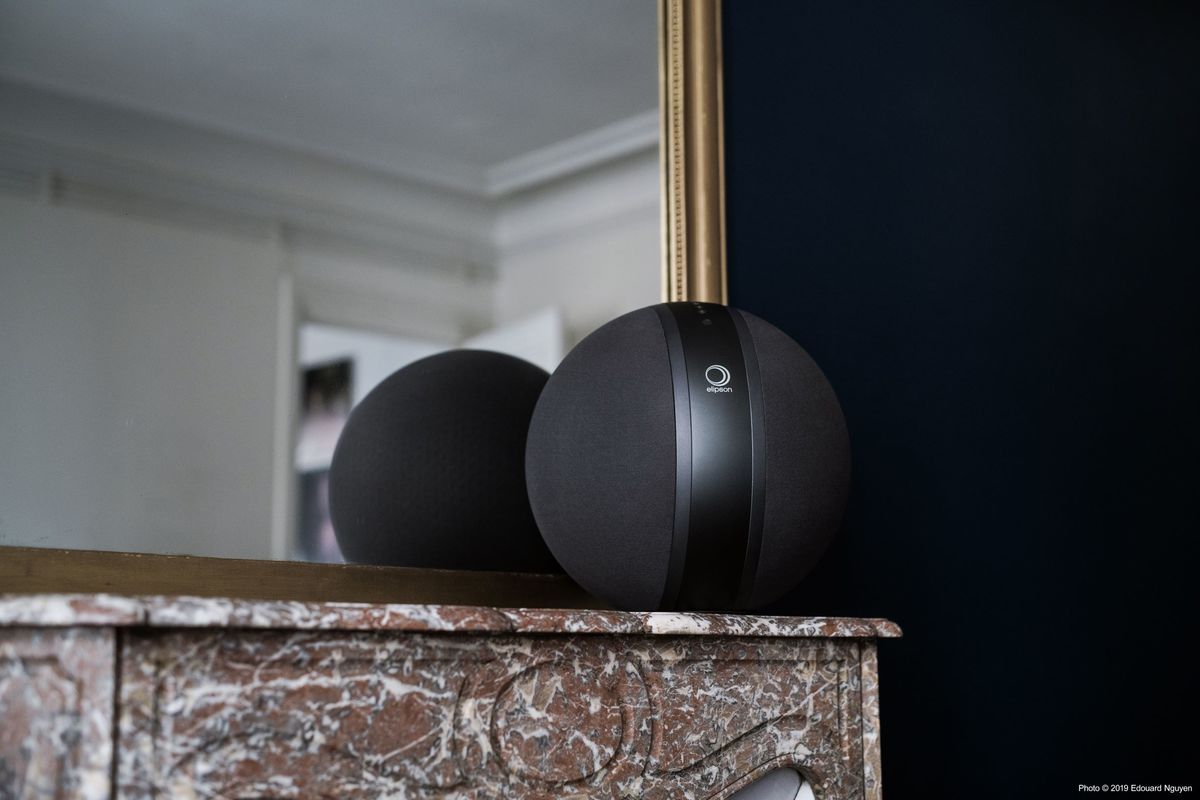
Many WiFi speakers are also compatible with AirPlay or AirPlay 2 protocols. These allow you to easily stream any audio from an Apple device (iPhone, iPad, Mac, iPod Touch, etc.). If you have an Android smartphone, the equivalent technology is Chromecast. To make things simpler, speakers with AirPlay 2 often also have a Chromecast built in, ensuring optimal compatibility with any Apple or Android device. This is the case with the Sonus faber Omnia and La Boîte Concept PR Link connected speakers.
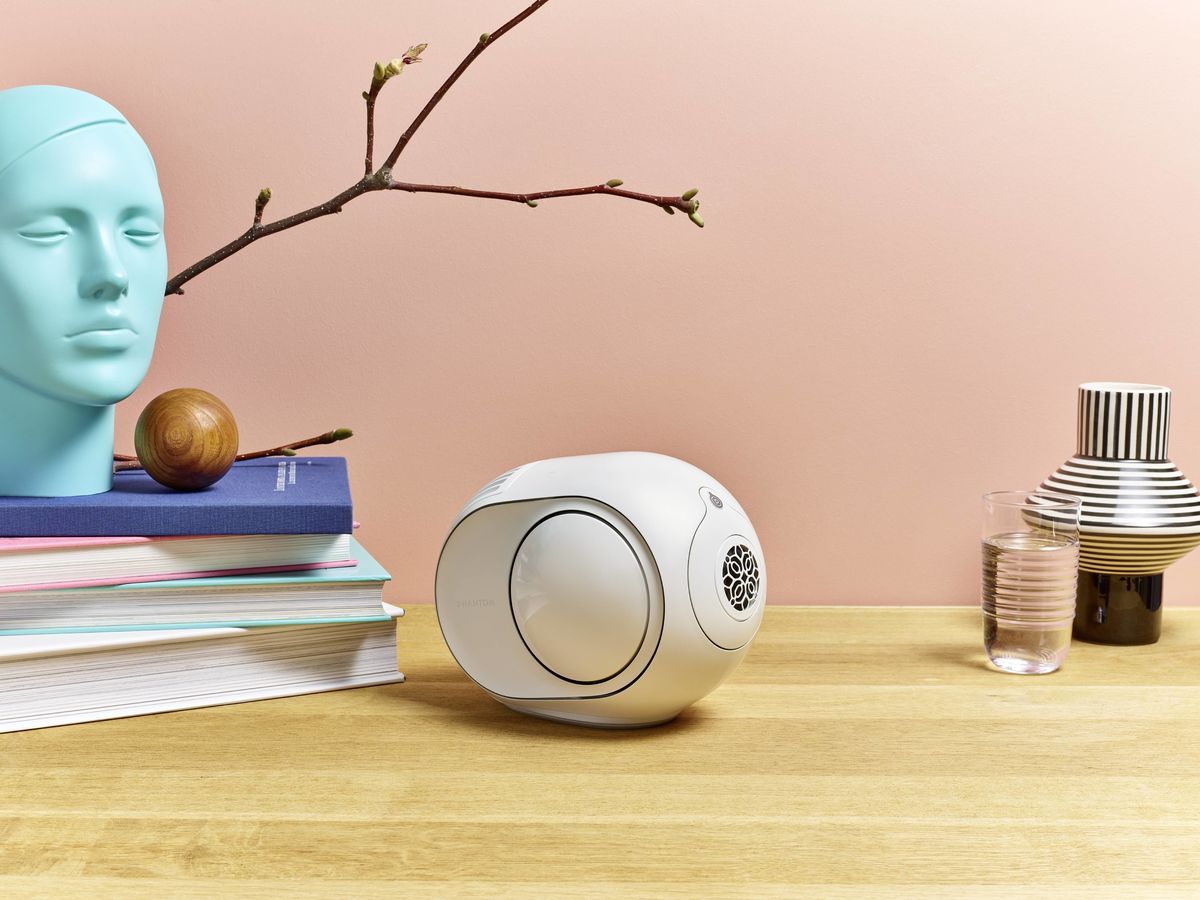
Among the other features of WiFi connected speakers, we can mention the DLNA protocol. Very popular, it allows you to play all the music shared over the local network. The ideal solution is to store all your music files on a NAS and use your smartphone or tablet as a remote control to sort and select the music to be played on the speaker. It’s very simple, powerful and intuitive. In this category, the Wiim Sound Display and Cabasse The Pearl Akoya are a must with their modern design and high-resolution DLNA playback.

Multi-room connected speakers
This category includes all WiFi and Ethernet connected speakers that have the ability to be wirelessly connected to other compatible speakers or devices to create a multi-room system. Several wireless speakers can be linked together to play the same music from one room to another in the house or to create a stereo pair. Each multi-room speaker manufacturer uses its own transmission system to stream music in sync. Examples are the Elipson, Denon Heos and Bluesound multi-room speakers. It is important to keep this in mind, because once you’ve bought your first connected speaker, if it uses proprietary technology you’ll have to choose speakers from the same brand to create a multi-room audio system. The only exceptions are connected multi-room speakers that use Chromecast or AirPlay 2 technology, which allow you to mix brands.
If you want to create a multi-room system with multiple speakers, we recommend Sonos connected speakers: the Sonos Five, Sonos Era 100 and Sonos Era 300. Their multi-room ecosystem is among the most successful and easiest to implement. They can be paired with other Sonos speakers, but also with any other AirPlay 2 or Chromecast compatible model. Sonos speakers can even be used as wireless surround sound speakers with a Sonos soundbar to create a true wireless home theater system.
Voice assistant connected speakers
Today, most connected multi-room speakers integrate Amazon Alexa and/or Google Assistant. These are called smart connected speakers. These are the easiest to use, allowing you to control the music vocally, once a free account has been created and the speaker has been associated. You just have to talk to the speaker and the integrated assistant will respond to your every request: play music, change the track, change the volume, put on the radio, play the same track on several speakers, etc. It is also possible to make countless requests and control other connected objects in the house.

However, not all smart connected speakers include a microphone for voice control. Some of them are only compatible with voice assistants and need to rely on the microphone of a smartphone or another smart speaker. So remember to check that the assistants are integrated and not only compatible if you want your speaker to include a microphone.
Wireless hi-fi speakers
A wireless hi-fi speaker is a connected speaker that necessarily works in pairs to provide stereo sound. These are the models that are closest to traditional hi-fi systems, minus the amplifier. They have the same features as the other ranges of connected speakers, including Bluetooth transmission, WiFi, access to streaming services or DLNA playback, depending on the model. Wireless hi-fi speakers are based on the same principles as classic hi-fi speakers and are available in compact (bookshelf) or floorstanding versions. Many manufacturers even offer a wireless version of their most popular hi-fi speakers. Examples of this are the Argon Audio Fenris Active A4, Elipson Prestige Facet II 6B Active and KEF LS50 Wireless 2 connected speakers.
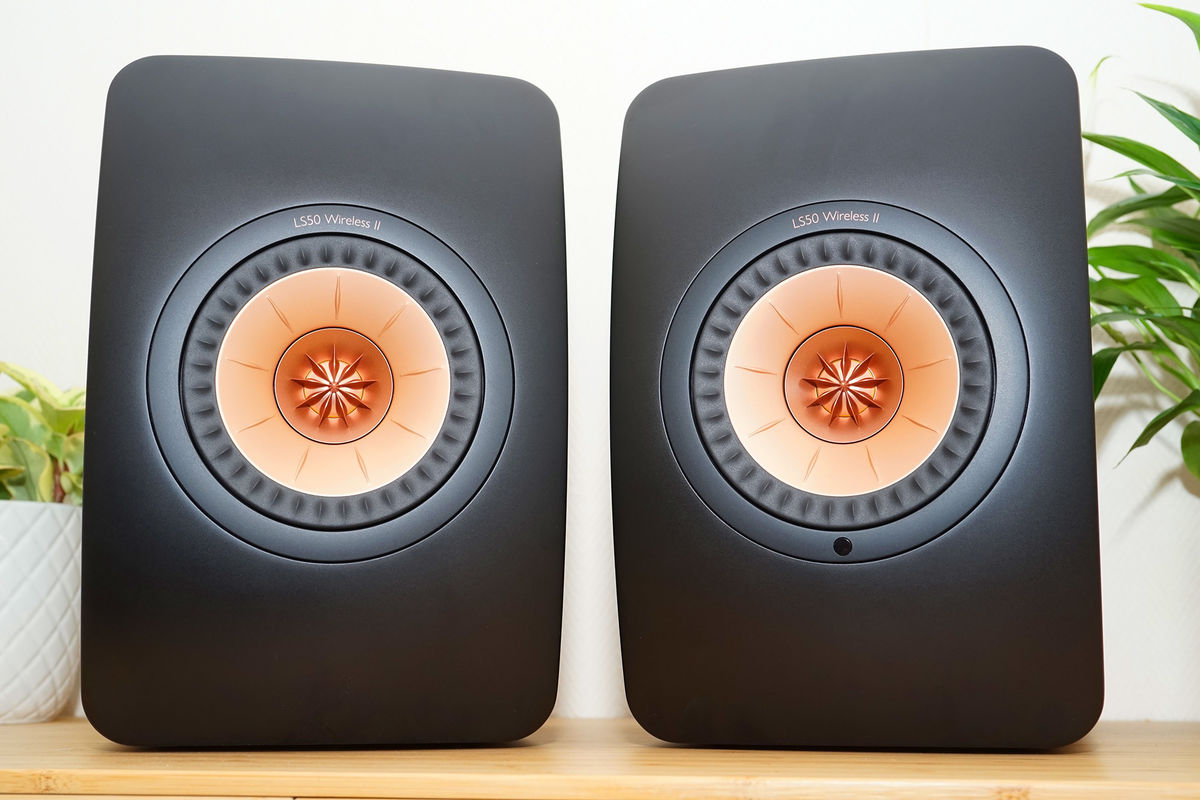
Using the same design criteria and acoustic elements as their passive counterparts, wireless hi-fi speakers ensure a high-quality sound reproduction. They are the best choice for the most demanding music lovers looking for a system that is simpler than a conventional hi-fi system, but just as powerful. Note that many wireless hi-fi speakers still require a wired connection between the two speakers. Very often, the amplification and connectivity are integrated in a single speaker, while the second is passive and needs to be powered by the “master” speaker. Some models like the KEF LS50 Wireless 2 or the Cabasse Rialto do not need this connection and communicate with each other wirelessly.

Connected speaker connectors
Although connected speakers are primarily intended to access streaming services and wireless transmission, they still offer physical connectors. They vary from one model to another, but there is usually a 3.5mm mini-jack audio input to connect an analog source such as a CD player or DAP. The more complete models offer RCA, optical, coaxial, USB or even HDMI ARC inputs.
It is therefore necessary to think carefully about your sources in order to choose a connected speaker with the right connectors to meet your needs. For example, to enjoy the sound of the TV, it is necessary to opt for a speaker with an optical input or, ideally, an HDMI ARC input, such as the Naim Mu-so 2, Argon Audio Forte A4 MK2 or Q Acoustics Q Active 200.

Connected speaker design
Connected speakers often have more varied shapes and fewer parallel lines than passive speakers. Some models, such as the Elipson W35 Xi, Harman Kardon Soundstick 5 and Samsung Music Frame are genuine decorative objects that can be proudly displayed. Therefore, it is easy to find a connected speaker that fits perfectly in your home. If you’re a fan of vintage design, the Marshall Stanmore 3, McIntosh RS250, Tangent Elio Mono and Klipsch The Fives connected speakers are references in this field. Conversely, if your home decor is more contemporary, the Cabasse The Pearl Akoya is a good model to choose.

Which connected speakers are the best?
Throughout this guide, we have compared the various types of connected speakers, as well as the characteristics to consider, to help you make your choice. Based on these criteria and numerous reviews, we’ve made a non-exhaustive selection of the best connected speakers for all budgets.
The best connected speakers under €120
- Muse M-670: Bluetooth, mini-jack aux input, stereo pairing
- Amazon Echo Dot Max: WiFi / Bluetooth, acoustic autocalibration, Alexa
The best connected speakers from €120 to €300
- Klipsch The One+: 60W, 103 dB, Bluetooth, aux input, vintage design
- Sonos Era 100: Sonos and AirPlay 2 multi-room, Bluetooth, Alexa and Google Assistant
- Marshall Stanmore III: 80W, Bluetooth, 2-way bass-reflex, aux and RCA input
- Denon Home 150: WiFi / Bluetooth, Heos AirPlay 2 multi-room, streaming services
- Tangent Spectrum Square: 60W, Bluetooth, 2 x 4″ drivers + 2 x tweeters
The best connected speakers from €300 to €500
- Harman Kardon Soundstick 5: 190W, 3-way, Bluetooth, aux + HDMI ARC inputs
- Denon 250: AirPlay 2/Heos multi-room, streaming services, Google Assistant
- Klipsch The Three+: 50W, 2.1 Bluetooth aptX, USB and aux.
- Samsung Music Frame: 120W, WiFi and Bluetooth, AirPlay 2 and Chromecast, Q-Symphony
- Sonos Era 300: class D amp, Dolby Atmos driver, autocalibration, multi-room
The best connected speakers from €500 to €1000
- Devialet II 95 dB: 350W, 3-way, multi-room, Spotify, HD audio, AirPlay, Bluetooth
- Elipson W35 XI: 350W, stereo, WiFi, Bluetooth aptX, multi-room, control app
- B&W Formation Flex: 100W, WiFi and aptX HD Bluetooth, AirPlay 2
- Naim Mu-so 2: 450W, Chromecast and AirPlay 2, HDMI ARC and optical
The best connected speakers over €1000
- Cambridge Audio Evo One: 700W, 14 drivers, HDMI eARC, WiFi, AirPlay 2, Chromecast, Bluetooth
- Sonus Faber Omnia: 490W, AirPlay 2, 16.5″ woofer, Chromecast, Roon, aptX HD
- Devialet Phantom Ultimate 108 dB: 1,100W, 3-way, multi-room, AirPlay 2 and Google Cast, Bluetooth
- McIntosh RS250: 650W, 8 drivers, AirPlay 2 and Chromecast, Bluetooth aptX HD, HDMI ARC
Want to go further with a portable Bluetooth speaker that can follow you into the garden? Need a more discreet solution with architectural speakers or a soundbar? Discover all our comparative guides to find the best speaker for every need:
- A comparison of the best outdoor speakers
- A comparison of the best architectural speakers
- A comparison of the best portable Bluetooth speakers
- A comparison of the best party speakers
- A comparison of the best soundbars
Connected speakers FAQ
A connected speaker works by being plugged into a mains socket. Once connected to the power supply, it is ready to play music via Bluetooth and/or Wi-Fi. It is a compact solution as it incorporates its own amplification system and one or more drivers.
It depends on the model. Some connected speakers can only stream music via Wi-Fi, while others can also play music via Bluetooth.
Yes, some connected speakers do not have a Wi-Fi module and use a Bluetooth receiver instead. The term “connected” mainly refers to speakers that do not have a battery and must be plugged into the mains to operate.
A Bluetooth speaker is a portable device with a built-in battery. This battery gives it the autonomy it needs to play music outdoors, for example. In contrast, a connected speaker must be plugged into the mains to work.
Alexa, Google Assistant and Siri are three voice assistants designed to control your connected devices and respond to your requests, but they differ in terms of their ecosystem. Alexa (Amazon) stands out for its broad compatibility with connected devices and its integration with Echo speakers. Google Assistant (Google) offers the most accurate responses and excellent integration with Android and Chromecast. Siri (Apple) is more exclusive but perfectly integrated with the Apple ecosystem (iPhone, HomePod, etc.), with excellent privacy protection.
It depends on the integrated voice assistant. Google Assistant allows you to use two languages simultaneously, for example French and English, without having to change the settings. Alexa and Siri, on the other hand, only support one active language at a time: you have to change the language in the settings to switch between them.
With a connected speaker, you can control many compatible household devices: light bulbs and light strips, connected sockets and switches, thermostats, roller shutters, televisions, multi-room speakers, cameras and even robot vacuum cleaners. Everything can be controlled by voice, depending on the ecosystem you choose (Alexa, Google Home or Apple HomeKit).
Yes, most connected speakers can also function as standard Bluetooth speakers. This means you can stream music directly from your smartphone, tablet or computer without using WiFi or voice assistant services. The only difference is that connected speakers do not have a battery and therefore need to be plugged into the mains at all times.
Yes, a connected speaker can play audiobooks and podcasts.


